BASICS ABOUT ELECTRICITY
Voltage: Voltage, electric potential difference, electric pressure or electric tension is the difference in electric potential between two points. The difference in electric potential between two points (i.e., voltage) in a static electric field is defined as the work needed per unit of charge to move a test charge between the two points. In the International System of Units, the derived unit for voltage is named volt.
Current :an electric current is a flow of electric charge. In electric circuits this charge is often carried by moving electrons in a wire. It can also be carried by ions in an electrolyte, or by both ions and electrons such as in an ionised gas (plasma).
The SI unit for measuring an electric current is the ampere, which is the flow of electric charge across a surface at the rate of one coulomb per second. Electric current is measured using a device called an ammeter
| Electric current | |
|---|---|

A simple electric circuit, where current is represented by the letter i. The relationship between the voltage (V), resistance (R), and current (I) is V=IR; this is known as Ohm's law.
| |
Common symbols
| I |
| SI unit | ampere |
Derivations from
other quantities | |
| Dimension | I |
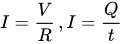
Resistance:
Resistance is the opposition that a substance offers to the flow of electric current. It is represented by the uppercase letter R. The standard unit of resistance is the ohm, sometimes written out as a word, and sometimes symbolized by the uppercase Greek letter omega
