martes, 5 de marzo de 2019

Circuits

WHAT IS A CIRCUITAn electronic circuit is composed of individual electronic components, such as resistors, transistors, capacitors, inductors and diodes, connected by wires or traces through which the electric current can flow

Elements (motor, wires, lamps, switches...)

motor:An electric motor is an electrical machine that converts electrical energy into mechanical energy. Most electric motors operate through the interaction between the motor's magnetic field and winding currents to generate force in the form of rotation

wires:An electric circuit is like a pathway made of wiresthat electrons can flow through

lamps:When the connections are made properly, the circuit will “close” and current will flow through the circuit and light the lamp

switches:An electrical switch is any device used to interrupt the flow of electrons in a circuit.

TYPES OF CIRCUITS:

types of circuitstypes of circuits

lunes, 18 de febrero de 2019

BASICS ABOUT ELECTRICITY


BASICS ABOUT ELECTRICITY


Voltage: Voltage, electric potential difference, electric pressure or electric tension is the difference in electric potential between two points. The difference in electric potential between two points (i.e., voltage) in a static electric field is defined as the work needed per unit of charge to move a test charge between the two points. In the International System of Units, the derived unit for voltage is named volt.
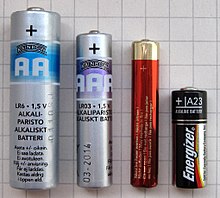
AA AAA AAAA A23 battery comparison-1.jpg


 Current :an electric current is a flow of electric charge. In electric circuits this charge is often carried by moving electrons in a wire. It can also be carried by ions in an electrolyte, or by both ions and electrons such as in an ionised gas (plasma).
The SI unit for measuring an electric current is the ampere, which is the flow of electric charge across a surface at the rate of one coulomb per second. Electric current is measured using a device called an ammeter


Electric current
Ohm's Law with Voltage source TeX.svg
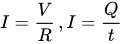
A simple electric circuit, where current is represented by the letter i. The relationship between the voltage (V), resistance (R), and current (I) is V=IR; this is known as Ohm's law.
Common symbols
I
SI unitampere
Derivations from
other quantities
DimensionI


Resistance:
Resistance is the opposition that a substance offers to the flow of electric current.  It is represented by the uppercase letter R.  The standard unit of resistance is the ohm, sometimes written out as a word, and sometimes symbolized by the uppercase Greek letter omega 

Resultado de imagen de resistance definition